Current position > News detail
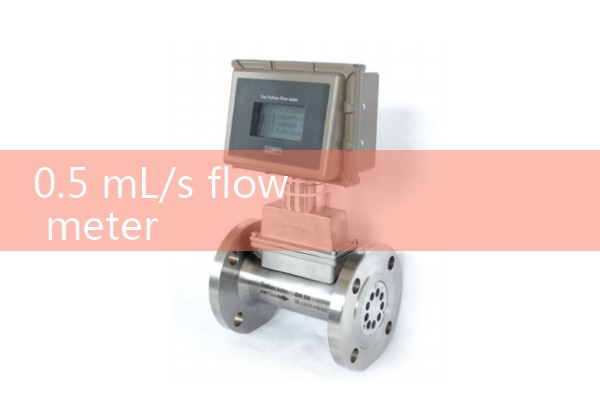
0.5 mL/s flow meter
『0.5 mL/s flow meter』Related information(v cone flow meter|rotary gas meter|gallon meter|gear meter|metal tube rotameter|glass tube rotameter|nutating disk meter|transit time ultrasonic flow meter|wedge flow meter|pd meters|hydraulic flow meter|ultrasonic water flow meter|water flow meter|air flow meter|magnetic water flow meter|oxygen flow meter|gas flow meter|argon flow meter|air velocity meter|gasoline flow meter|fuel flow meter|ultrasonic water meter|digital water meter|nitrogen flow meter|solid flow meter|Oxygen tank flow meter|digital water flow meter|diesel fuel flow meter|steam flow meter|02 flow meter|compressed air flow meter|oil flow meter|liquid flow meter)
 **Understanding the 0.5 mL/s Flow Meter: Precision Measurement for Low-Flow Applications**
In the world of fluid dynamics and process control, flow meters are indispensable tools for measuring the rate at which liquids or gases move through a system. Among the vast array of flow measurement devices, those designed for very low flow rates, such as the 0.5 mL/s flow meter, occupy a specialized and crucial niche. This article explores the significance, working principles, applications, and key considerations of flow meters capable of measuring precisely at 0.5 milliliters per second.
**What Does 0.5 mL/s Mean?**
To fully appreciate the capability of such a device, it is helpful to put the flow rate into perspective. 0.5 milliliters per second (mL/s) is an extremely low flow rate. In more familiar units, this equals 30 milliliters per minute, or approximately 1.8 liters per hour. For comparison, a standard intravenous (IV) drip might deliver fluids at a rate of about 1 mL per minute—meaning a 0.5 mL/s flow meter would measure a rate 30 times faster than a typical IV. Conversely, it is about 30 times slower than a standard kitchen faucet running at a moderate pace. This level of precision is essential for applications where even minor fluctuations in flow can have significant consequences.
**Working Principles**
Measuring such low flow rates accurately requires highly sensitive and often sophisticated technology. Several common principles are employed in low-flow meters:
1. **Thermal Mass Flow Measurement**: This is one of the most popular methods for low-flow gas applications. A small heating element is placed in the flow path, and temperature sensors measure the heat carried away by the passing fluid. At 0.5 mL/s, the t
 emperature change is directly proportional to the mass flow rate. This method offers high accuracy and fast response times.
2. **Coriolis Effect**: While Coriolis meters are typically associated with larger flows, miniaturized versions exist for low-flow applications. They work by vibrating a small tube; the fluid flowing through the tube causes a phase shift in the vibration, which is precisely measured. These meters are incredibly accurate and unaffected by changes in fluid density, viscosity, or temperature.
3. **Ultrasonic Transit-Time**: In this method, ultrasonic signals are sent both with and against the direction of flow. The difference in travel time is used to calculate the flow velocity. For very low flows, advanced signal processing is required to detect the minute time differences. These meters are non-invasive and suitable for clean liquids.
4. **Positive Displacement**: Small gear or piston meters can physically trap and count discrete volumes of fluid. For a target of 0.5 mL/s, the meter must have extremely tight tolerances and low friction to avoid introducing measurement errors.
**Applications Across Industries**
The ability to measure 0.5 mL/s with high precision opens the door to a wide range of specialized applications:
- **Pharmaceutical and Biotechnology**: In drug formulation, chromatography, and cell culture processes, precise control of reagent addition is critical. A 0.5 mL/s flow meter ensures that active ingredients are mixed in exact proportions, maintaining product quality and consistency.
- **Chemical Injection**: In industrial processes, corrosion inhibitors, catalysts, or pH adjusters are often injected into a main flow stream at very low rates. Accurate measurement ensures the che
『SILVER Official Website SERVICE』
User:flowinstruments8c42fLast Time:07/22/2026