

 Current position > Product detail
『Clamp-on Flow Meter for Water: Simple Temporary Pipeline Inspection Systems』Related information(v cone flow meter|rotary gas meter|gallon meter|gear meter|metal tube rotameter|glass tube rotameter|nutating disk meter|transit time ultrasonic flow meter|wedge flow meter|pd meters|hydraulic flow meter|ultrasonic water flow meter|water flow meter|air flow meter|magnetic water flow meter|oxygen flow meter|gas flow meter|argon flow meter|air velocity meter|gasoline flow meter|fuel flow meter|ultrasonic water meter|digital water meter|nitrogen flow meter|solid flow meter|Oxygen tank flow meter|digital water flow meter|diesel fuel flow meter|steam flow meter|02 flow meter|compressed air flow meter|oil flow meter|liquid flow meter)
Clamp-on Flow Meter for Water: Simple Temporary Pipeline Inspection Systems
Quick Answer
A clamp-on flow meter for water measures flow from outside the pipe. You strap ultrasonic transducers onto a DN15 to DN6000 pipe and get a flow reading without cutting or tapping the line. This is the fastest way to inspect temporary pipelines, verify pump discharge, or run a water balance test.
Silver Automation Instruments supplies clamp-on ultrasonic flow meters for water, wastewater, and industrial cooling lines. The typical model is the Silver Instruments SUT-200 series. We can supply handheld versions for field checks and fixed versions for simple temporary pipeline inspection systems.
What Is a Clamp-on Flow Meter for Water
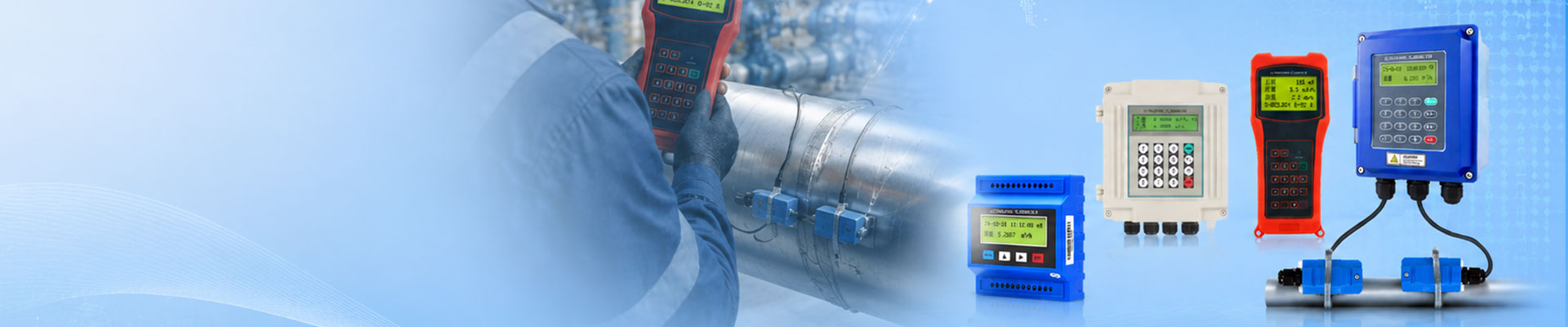
This meter is an ultrasonic flow instrument. It uses a pair of transducers that clamp on the outside surface of a pipe. The transducers send and receive sound signals through the pipe wall. The meter compares signal travel time in both directions. From that difference the electronics calculate flow velocity and volumetric flow. There is no contact between the sensors and water. There is no pressure drop. There is no need to shut down the line.
Why Temporary Pipeline Inspection Needs This Meter
Most temporary piping jobs have one common problem. You cannot cut the pipe. A construction bypass, a pump test loop, or a rented pipeline skid often uses carbon steel, ductile iron, or HDPE. The pipe may belong to a contractor. You need a measurement for three days or three weeks. Installing an inline magmeter means welding, flanges, gaskets, and shutdown time. That cost often exceeds the rental cost of the whole line.
A clamp-on flow meter solves this. You program the pipe material, outer diameter, wall thickness, and lining. The meter reads flow within minutes. When the job ends, you remove the transducers and move them to the next site. We have seen this approach on construction dewatering jobs, municipal water audits, and mining pump tests.
Key Specifications That Matter
Engineers ask about accuracy first. For a temporary water inspection, the Silver Instruments SUT-200 gives accuracy of plus or minus 1.0 percent of reading for pipe sizes above DN50. On smaller pipes the accuracy is plus or minus 1.5 percent of reading. Repeatability is 0.2 percent. The measuring range covers flow velocity from 0.01 to 12 metres per second.
The standard transmitter supports 4-20 mA HART, RS485 Modbus RTU, and an optional PT100 input for heat measurement. Power supply can be 24 VDC or 85 to 264 VAC. The handheld version runs on a rechargeable battery for up to 10 hours. The transducer temperature rating is from minus 40 degrees C to 160 degrees C. For special zones we can provide ATEX Zone 1 certified transducers.
Pipe materials include carbon steel, stainless steel, cast iron, ductile iron, copper, and PVC. For HDPE and lined pipes we adjust the signal setting and use a wider transducer spacing. Water quality does not affect the reading much. The meter works with clean water, river water, cooling water, and treated wastewater. It does not work well with high solids sludge or large air bubbles.
Recommended Models for Temporary Water Lines
For a basic inspection you can use the SUT-200 handheld clamp-on flow meter. It stores data for a few thousand points and works well for spot checks. For a temporary line that needs a 4-20 mA signal to a PLC or a chart recorder, choose the SUT-200 wall mount version. Add the PT100 input if you also need heat or chilled water energy tracking. The same meter can calculate kg/h if you select water as the fluid at a kno
_600x400.jpg)
Do not guess the transducer spacing. The meter calculates the spacing after you enter the pipe OD and wall thickness. Use a pipe outside diameter tape and an ultrasonic wall thickness gauge. A 2 mm error on wall thickness on a DN100 pipe can shift the reading by several percent.
Installation on a Temporary Water Line
Here is the thing. Most engineers skip pipe preparation. Clean the surface first. Remove loose paint, rust, and dirt. Apply the ultrasonic coupling gel supplied with the transducers. For long term temporary jobs, use the stainless steel mounting bands instead of zip ties. The bands hold the transducer spacing stable. A loose strap drifts, and the flow reading drifts with it.
Mount the transducers on a straight pipe run. Use at least 10 pipe diameters of straight pipe upstream and 5 pipe diameters downstream from the transducer. Avoid mounting directly after a butterfly valve, a check valve, or a 90 degree elbow. The best position is on a horizontal pipe with transducers at the 3 and 9 positions, not top and bottom. This position avoids sediment at the bottom and air pockets at the top.
Where We See This Used
A water utility in the Philippines used a SUT-200 clamp-on meter on a DN250 temporary bypass during a pump replacement. The bypass ran for 14 days. The utility needed to prove how much water was diverted while the main pump was offline. The meter logged flow every 30 seconds. The 4-20 mA output went to the control room and showed daily volume on a shared display.
A mining contractor in Western Australia used the same meter on a HDPE pipe for construction dewatering. The pipe moved every two days. The clamp-on design allowed the crew to remove and reinstall transducers in less than one hour. They used the handheld version and downloaded data to a laptop at the end of each shift.
FAQ
What is the smallest pipe size for a clamp-on flow meter for water?
Most standard clamp-on meters work from DN15 upward. For pipes below DN15, the signal becomes weak and the accuracy drops. We normally recommend a small inline positive displacement meter for those sizes.
Can a clamp-on meter read bi-directional flow?
Yes. The SUT-200 series reads flow in both directions. You can set a negative flow sign for reverse flow. This is useful when a temporary line can feed water in either direction.
Does pipe material affect the reading?
Yes. The meter has settings for common pipe materials. For unusual materials like fibreglass or asbestos cement, send us the pipe OD, wall thickness, and material. We will help you configure the signal.
Can the meter handle dirty water during a temporary inspection?
It works with moderate turbidity and some solids. High solids content, air bubbles, or a partially full pipe will cause signal loss. If your water has heavy sludge, use a full bore electromagnetic flow meter instead.
What do we need to send for a quote?
Send us your pipe outer diameter, wall thickness, material, water temperature, pressure, and whether you need a handheld or fixed mount version. A photo of the pipe always helps.
Contact and Quote Request
For a clamp-on flow meter for water on a temporary pipeline inspection, contact Silver Automation Instruments directly. Send us your pipe size, material, wall thickness, water temperature, and required output signal. Our team will recommend the correct SUT-200 model and transducer set.
Tel: +86-25-68650347
Whatsapp: +86-25-52155837
WeChat: +86 15365082610