

『Low Flow Meter For Glue Ml/Min Nozzle Control Systems』Related information(v cone flow meter|rotary gas meter|gallon meter|gear meter|metal tube rotameter|glass tube rotameter|nutating disk meter|transit time ultrasonic flow meter|wedge flow meter|pd meters|hydraulic flow meter|ultrasonic water flow meter|water flow meter|air flow meter|magnetic water flow meter|oxygen flow meter|gas flow meter|argon flow meter|air velocity meter|gasoline flow meter|fuel flow meter|ultrasonic water meter|digital water meter|nitrogen flow meter|solid flow meter|Oxygen tank flow meter|digital water flow meter|diesel fuel flow meter|steam flow meter|02 flow meter|compressed air flow meter|oil flow meter|liquid flow meter)
 ```html
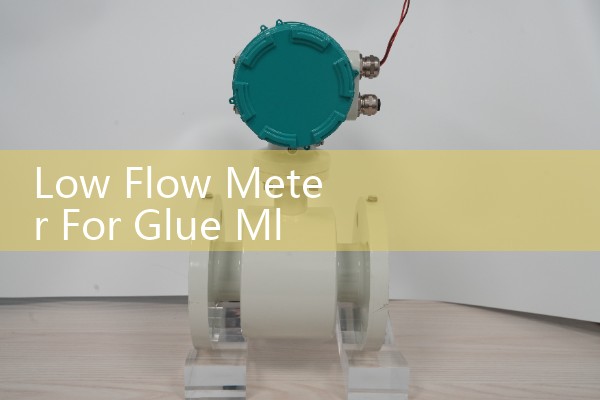
Low Flow Meter For Glue Ml/Min Nozzle Control Systems
Quick Answer: For precise glue dosing at ml/min rates in nozzle control systems, Silver Automation Instruments recommends either a micro Coriolis mass flow meter or a micro oval gear flow meter. Coriolis meters handle viscosity changes, pulsating flow, and abrasive fillers without re-calibration, while oval gear meters offer a lower cost option for clean, steady, low-viscosity adhesives. We ship to Southeast Asia, Latin America, Africa, and the Middle East with full 4-20 mA HART and pulse output integration.
Most engineers skip the theory and go straight to what works on the factory floor. A nozzle control system for glue, polyurethane, or epoxy needs a low flow meter that survives 5,000 cP adhesives, detects zero-flow between shots, and plugs directly into a PLC. Silver Automation Instruments supplies both thermal and volumetric micro meters tested for these exact conditions.
Why a General-Purpose Flow Meter Fails on Glue Nozzles
We have seen this on customer sites many times. A plant manager in Johor Bahru installed a turbine flow meter to dose cyanoacrylate glue at 3 ml per shot. The meter seized within a week. The fluid was not just viscous; it was sticky, curing on contact with moisture and building a layer on the rotor. That meter had a minimum flow of 150 ml/min, so at 3 ml/min the bearing never moved correctly. Low flow metering for glue requires a sensor that tolerates small ID tubes, low velocities, and high static pressure at the nozzle tip.
Coriolis Micro Meter: The Engineer’s Choice for Adhesives
Silver Instruments CMF-DS series micro Coriolis flow meter works from 0.2 ml/min up to 2,000 ml/min on a DN3 or DN6 tube. Inside, a stainless steel dual U-tube oscillates at its natural frequency. When glue flows through, the inlet and outlet legs twist slightly. That twist, measured by PT100 and inductive pick-off sensors, gives a direct mass flow reading in grams per minute. Because mass flow is independent of viscosity, a change from 2,000 cP to 12,000 cP does not shift the calibration. No density adjustment is needed when switching from a clear acrylic adhesive to a filled epoxy with silica. The meter also outputs density and temperature, which helps detect air bubbles in the nozzle line. For applications demanding ATEX Zone 1 compliance, we configure the CMF-DS with intrinsically safe barriers and a remote transmitter.
Oval Gear Meter: Affordable, But Pick Your Glue Carefully
In Vietnam, a carton sealing line uses our OGM-SS-0.2 oval gear flow meter to measure hot melt adhesive at 15 ml/min. The oval gears are made of 316L stainless steel with PEEK bearings, ideal for temperatures up to 180 °C. Here is the thing: oval gear meters work best with lubricating, clean adhesives. If your glue contains hard fillers like aluminum oxide or carbide, the gear tips will wear and the meter will under-report after a few thousand litres. For unfilled polyester or PUR hot melt, an oval gear meter gives ±0.5% reading accuracy and a pulse output (1 ml per pulse) that integrates directly with a nozzle dispenser PLC. We do not hide this limitation. We tell customers upfront to send us a sample or a particle size report before ordering.
Nozzle Control Signals and Real-Time Dosing
A typical setup in a Brazilian shoe sole injection line looks like this: the glue meter sits right after a gear pump and before the needle nozzle. The meter’s 4-20 mA HA
Installation Tricks That Prevent Air and Curing Problems
Because glue hardens in dead legs, we insist on a straight flow path. A DN4 tube meter from Silver Automation mounts with compression fittings, which eliminates internal steps where glue can pool. We recommend a low dead volume pressure sensor immediately upstream and a small bypass for purging solvent. In one application in Nairobi for clear lacquer spray nozzles, the meter was mounted vertically with flow upward. This forced any air bubbles to rise and pass through rather than accumulate and cause a spike in the density reading. Also, keep the meter close to the nozzle. A 3-meter line between the meter and the nozzle will add lag that ruins shot repeatability below 0.5 ml.
Five Frequently Asked Questions About Glue Flow Meters
Q: Can I use a micro thermal mass flow meter for glue?
A: Rarely. A thermal meter works on the cooling effect of the fluid. High-viscosity glue has low thermal conductivity and forms a film on the sensor, which makes the reading drift. We only suggest thermal for solvent-based, low-viscosity adhesives around 20 cP.
Q: Do you supply meters with IO-Link for Industry 4.0 glue nozzle stations?
A: Yes. Silver Instruments provides IO-Link on both the oval gear and Coriolis micro meter models. Through IO-Link you can read flow rate, total dosed volume, fluid density, and sensor temperature directly from one M12 connector.
Q: How do I prevent curing of cyanoacrylate inside the flow meter?
A: Choose a meter with a low internal volume and a surface finish of Ra 0.8 µm or better to minimize adhesion. Flush the meter with nitromethane after each shift. We can supply a flushing manifold with check valves as a pre-assembled skid.
Q: What is the lead time for a low flow glue meter to Mexico?
A: Standard lead time is 3-4 weeks via DHL. If you need ATEX or IECEx certification, allow 5 weeks. We have a local distributor network in Mexico City and Monterrey for on-site start-up support.
Q: How do I order a meter if my shot size varies between 0.3 and 2.5 ml?
A: Give us the full range with your required accuracy. We will size the meter for the maximum flow to avoid pressure drop, but also check the turndown ratio. Silver Instruments Coriolis meters have a 100:1 turndown, so a 2.5 ml/min maximum covers 0.3 ml/min with full accuracy.
Receive Your Quote Within 24 Hours
We have supplied low flow glue meters to packaging lines in Thailand, filter potting stations in Egypt, and medical device bonding rigs in Australia. Send us your glue type, viscosity in cP, shot volume per nozzle (ml/min), pipe connection size (DN), and required analog or bus output. Our engineering team at flow-meter.com.au will return a data sheet, a price, and a CAD drawing for your nozzle integration. Email us at [email protected] or use the quote form on our site.
``` Hot Blog
 Related AD