

『Borehole Flow Meter: Sourcing Hydrographic Deep Well Deep-Well Fluid Trackers』Related information(v cone flow meter|rotary gas meter|gallon meter|gear meter|metal tube rotameter|glass tube rotameter|nutating disk meter|transit time ultrasonic flow meter|wedge flow meter|pd meters|hydraulic flow meter|ultrasonic water flow meter|water flow meter|air flow meter|magnetic water flow meter|oxygen flow meter|gas flow meter|argon flow meter|air velocity meter|gasoline flow meter|fuel flow meter|ultrasonic water meter|digital water meter|nitrogen flow meter|solid flow meter|Oxygen tank flow meter|digital water flow meter|diesel fuel flow meter|steam flow meter|02 flow meter|compressed air flow meter|oil flow meter|liquid flow meter)
Borehole Flow Meter: Sourcing Hydrographic Deep Well and Deep-Well Fluid Trackers
Quick Answer
A borehole flow meter measures water or process fluid discharge from a drilled well, borehole pump test, or deep well monitoring line. Silver Automation Instruments supplies electromagnetic and ultrasonic deep well flow meters with 4-20 mA HART output, pulse output, and optional PT100 temperature compensation for pipe sizes from DN15 to DN600. Send your pipe diameter, flow range, pressure in bar, and temperature in degrees Celsius for a specific quote.
What Is a Borehole Flow Meter and Why Deep Well Fluid Tracking Matters
A borehole flow meter is usually installed on the discharge pipe of a submersible pump or on a surface line connected to the wellhead. Hydrographic teams, mining operators, and water utility crews use it to record total volume and instantaneous flow rate. The data feeds hydrographic models, groundwater allocation reports, and pump test records.
Most engineers skip the idea of a turbine meter in dirty borehole water because sand and silt wear moving parts. In practice, a full bore electromagnetic flow meter with a PTFE or polyurethane liner handles that service better. Because there are no moving parts in the flow stream, maintenance drops sharply.
Flow Meter Types for Hydrographic Deep Well Work
We supply three main types for borehole and deep well service.
Inline electromagnetic flow meter. This is the standard for DN15 to DN300 discharge lines. Use a PTFE liner with 316L electrodes for freshwater. For saline groundwater, geothermal brine, or mining water, select tantalum electrodes or titanium electrodes.
Insertion electromagnetic flow meter. This works well on larger deep well discharge headers from DN200 to DN600. A hot tap insertion probe lets you remove the sensor without shutting down the line. The probe collects velocity data and the transmitter converts it to flow rate using the pipe internal diameter.
Clamp-on ultrasonic flow meter. This is a portable option for quick checks on exposed pipe. Accuracy depends on pipe wall condition and straight run. For permanent custody transfer or regulatory reporting, we recommend an inline electromagnetic meter instead.
Sourcing Parameters That Decide the Deep Well Flow Meter Model
You need four numbers before you ask for a price. First, pipe size. Borehole discharge lines are often DN40, DN50, DN80, or DN100. Second, flow range in m3/h or L/s. Third, pressure rating in bar. Fourth, water chemistry. Salinity, pH, and sand content change the electrode and liner choice.
Signal output matters at the PLC or SCADA end. Most sites specify 4-20 mA HART because it carries flow, totalizer, and diagnostics on one pair of wires. For battery powered remote sites, pulse output or RS485 Modbus uses less power.
Installation style also matters. A full bore meter needs mating flanges and a straight run of 5D upstream and 2D downstream. A clamp-on ultrasonic meter can be set up in minutes but will not beat the accuracy of a full bore electromagnetic meter in silty water.
Recommended Silver Instruments Models and Setup
For a standard water borehole pump test, we recommend the Silver Instruments full bore electromagnetic flow meter with compact or remote transmitter. Common configurations include DN50 PN16 flanges, 0 to 40 m3/h range, PTFE liner, 3
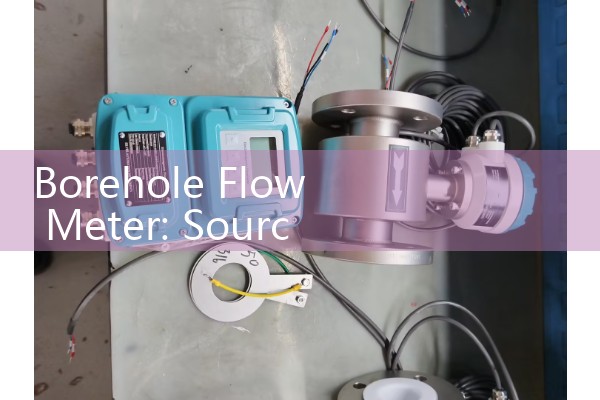
For hydrographic deep well monitoring with a data logger, pair the meter with a pressure transmitter at the wellhead and a paperless recorder. This gives you flow, pressure, and total volume on one local display. The recorder can store data on SD card and export CSV files.
For saltwater boreholes in coastal Australia, we have supplied meters with tantalum electrodes and polyurethane liners. For geothermal test wells in Southeast Asia, titanium electrodes handle the higher temperature and brine chemistry.
Field Installations We Have Seen
Last year a groundwater contractor in Queensland ran a 72 hour pump test on a 58 m deep borehole. The DN80 inline electromagnetic flow meter logged 21 m3/h with a total volume of 1512 m3. The client compared the reading with a calibrated weir and found a 1.4 percent deviation. The meter then stayed on site for permanent abstraction monitoring.
In Peru, a mining dewatering crew used an insertion electromagnetic flow meter on a DN250 wellfield header. Sand content was high. The PTFE liner and tungsten carbide electrodes survived eight months of continuous service. The previous turbine meter failed after three weeks.
These examples show the value of selecting the right sensor for the water chemistry and pipe size. A low price meter is not a good deal when it fails during a regulatory pump test.
How to Get a Borehole Flow Meter Quote from Silver Automation Instruments
Send us your pressure in bar, temperature in degrees Celsius, pipe size in DN, and flow range in m3/h. Tell us if the fluid is fresh water, saline water, mining water, or geothermal brine. We will reply with a model recommendation, lead time, and price.
Contact Silver Automation Instruments by telephone at +86-135-1213-1526 or on WhatsApp at 86-135-12131526. WeChat is +86 13512131526. See flow-meter.com.au for the full product range. We supply to customers in Southeast Asia, Oceania, Latin America, Africa, and the Middle East.
FAQ: Five Questions Engineers Ask About Borehole Flow Meters
What is the best flow meter for a borehole pump test?
For most freshwater boreholes, a full bore electromagnetic flow meter is best. Choose PTFE liner and 316L electrodes for DN15 to DN300. For dirty water, ask for tungsten carbide electrodes.
Can you measure deep well flow without cutting the pipe?
Yes, a clamp-on ultrasonic flow meter can be installed on exposed pipe. Accuracy is lower than an inline electromagnetic meter if the pipe is old or scaled. Use it for temporary checks, not for regulatory abstraction monitoring.
Do your borehole flow meters support 4-20 mA HART and Modbus?
Yes. Standard transmitters support 4-20 mA HART, pulse, and RS485 Modbus. Tell us which signal your PLC or SCADA system requires before ordering.
What is the minimum pipe size for a borehole flow meter?
We supply inline electromagnetic flow meters from DN15 to DN300. For smaller test lines we can quote a DN15 meter with a low flow range of 0 to 6 m3/h.
Can you supply a flow meter for saline or geothermal boreholes?
Yes. We select the electrode and liner based on salinity, temperature, and pH. Common choices are tantalum electrodes, titanium electrodes, PTFE liners, and polyurethane liners.
 Hot Blog
 Related AD