

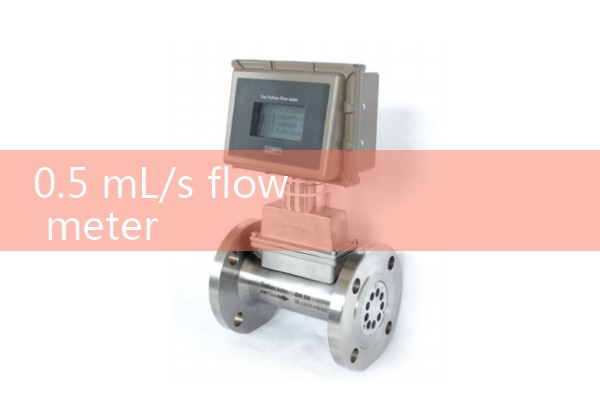
『0.5 mL/s flow meter』Related information(v cone flow meter|rotary gas meter|gallon meter|gear meter|metal tube rotameter|glass tube rotameter|nutating disk meter|transit time ultrasonic flow meter|wedge flow meter|pd meters|hydraulic flow meter|ultrasonic water flow meter|water flow meter|air flow meter|magnetic water flow meter|oxygen flow meter|gas flow meter|argon flow meter|air velocity meter|gasoline flow meter|fuel flow meter|ultrasonic water meter|digital water meter|nitrogen flow meter|solid flow meter|Oxygen tank flow meter|digital water flow meter|diesel fuel flow meter|steam flow meter|02 flow meter|compressed air flow meter|oil flow meter|liquid flow meter)
 **Understanding the 0.5 mL/s Flow Meter: Precision Measurement for Low-Flow Applications**
In the world of fluid dynamics and process control, flow meters are indispensable tools for measuring the rate at which liquids or gases move through a system. Among the vast array of flow measurement devices, those designed for very low flow rates, such as the 0.5 mL/s flow meter, occupy a specialized and crucial niche. This article explores the significance, working principles, applications, and key considerations of flow meters capable of measuring precisely at 0.5 milliliters per second.
**What Does 0.5 mL/s Mean?**
To fully appreciate the capability of such a device, it is helpful to put the flow rate into perspective. 0.5 milliliters per second (mL/s) is an extremely low flow rate. In more familiar units, this equals 30 milliliters per minute, or approximately 1.8 liters per hour. For comparison, a standard intravenous (IV) drip might deliver fluids at a rate of about 1 mL per minute—meaning a 0.5 mL/s flow meter would measure a rate 30 times faster than a typical IV. Conversely, it is about 30 times slower than a standard kitchen faucet running at a moderate pace. This level of precision is essential for applications where even minor fluctuations in flow can have significant consequences.
**Working Principles**
Measuring such low flow rates accurately requires highly sensitive and often sophisticated technology. Several common principles are employed in low-flow meters:
1. **Thermal Mass Flow Measurement**: This is one of the most popular methods for low-flow gas applications. A small heating element is placed in the flow path, and temperature sensors measure the heat carried away by the passing fluid. At 0.5 mL/s, the t
 Hot News
 Related AD