

『Selecting the Best Air Flow Meter for Compressed Air Systems and Leak Detection』Related information(v cone flow meter|rotary gas meter|gallon meter|gear meter|metal tube rotameter|glass tube rotameter|nutating disk meter|transit time ultrasonic flow meter|wedge flow meter|pd meters|hydraulic flow meter|ultrasonic water flow meter|water flow meter|air flow meter|magnetic water flow meter|oxygen flow meter|gas flow meter|argon flow meter|air velocity meter|gasoline flow meter|fuel flow meter|ultrasonic water meter|digital water meter|nitrogen flow meter|solid flow meter|Oxygen tank flow meter|digital water flow meter|diesel fuel flow meter|steam flow meter|02 flow meter|compressed air flow meter|oil flow meter|liquid flow meter)
Selecting the Best Air Flow Meter for Compressed Air Systems and Leak Detection
Quick Answer: For compressed air systems and leak detection, an insertion thermal mass flow meter delivers direct mass flow without needing temperature and pressure compensation. It detects very low flows and is very effective at pinpointing leaks. Silver Automation Instruments supplies thermal mass flow meters from DN15 to DN300 with 4-20 mA HART output and fast delivery to Asia, Oceania, the Middle East, and Africa.
Why Compressed Air Flow Measurement Matters
Compressed air is one of the most expensive utilities in a factory. Many plants in Southeast Asia lose 20 to 30 percent of their compressed air through leaks. A single 1 mm hole at 7 bar can cost over 1,200 USD per year in electricity. Last year a beverage factory in Indonesia had 15 small leaks in their pipe network. Their monthly electric bill dropped 8 percent after they fixed the leaks and installed a flow meter to monitor the system. Most engineers skip this part, but a well placed air flow meter pays for itself in months.
Accurate flow data helps you measure consumption by department and allocate energy costs. It also supports predictive maintenance. You can spot a new leak when the base load flow drifts higher. Without a meter, you are flying blind.
Why a Thermal Mass Flow Meter Is the Best Choice
Thermal mass meters measure the cooling effect of the gas flowing past a heated sensor. They directly read mass flow in Nm3/h, kg/h, or scfm. In practice, this means you do not need a separate pressure transmitter and temperature sensor to get a standardized mass flow value. The meter does it inside one instrument. Silver Automation Instruments offers insertion thermal mass flow meters with a 100:1 turndown ratio. Even a slow leak at 0.5 Nm/s is detected cleanly. A vortex meter often has a cut-off velocity around 2 to 3 m/s; small leaks stay invisible.
Our TMF series handles pipe sizes from DN15 up to DN300. The wetted parts are 316L stainless steel. The electronics give a 4-20 mA HART signal, RS485 Modbus, and a local display. Many customers in the Middle East use this meter on instrument air lines. Because oil-free compressed air does not foul the sensor, the meter stays stable for years. You can check the exact specs on our website flow-meter.com.au.
Alternatives: Vortex and Other Meter Types
Vortex flow meters are cheaper up front. They work well on saturated compressed air with normal flow rates. But they need a minimum Reynolds number, which means low flow readings are unreliable. That makes them unsuitable for leak detection programs. Also, a vortex meter requires straight upstream and downstream pipe lengths. In a crowded compressor room, you often cannot satisfy the 15D and 5D requirement. Here is the thing: vortex meters also need external pressure and temperature compensation if you want mass flow. A thermal meter gives you mass flow directly.
Ultrasonic clamp-on meters work on large pipes, but they struggle with low pressure air and have a high minimum flow velocity. Coriolis meters can measure compressed air, but the cost is extreme for a 4-inch line. That is why 90 percent of compressed air monitoring projects we handle use insertion thermal mass flow meters.
Inst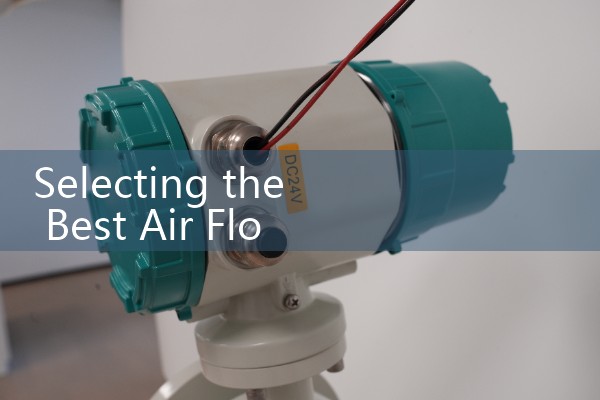
Do not install the meter right after a compressor or aftercooler until you have dry air. Wet, oily air coats the sensor and drifts the reading. A coalescing filter and a dryer upstream are mandatory. For insertion probes, pick a straight pipe section with 10D upstream and 5D downstream if possible. In tight spaces, you can use a flow conditioner, but it adds cost. We have seen on customer sites many times that the biggest flow reading errors come from poor placement. Spend half a day verifying the pipe layout. It is worth it.
If you plan to detect leaks, install the meter on the main header downstream of the dryer and receiver tank. Then, watch the flow during a no-production period. The base load reveals your leak rate. A typical reading we saw at a chemical plant in South Africa was 42 Nm3/h during idle. After fixing ring mains and connectors, they dropped to 11 Nm3/h. That is 30 Nm3/h of compressed air saved. Send us your pressure and pipe size, and we will help you size the meter correctly.
How Silver Automation Instruments Supports Your Project
We ship thermal mass flow meters to over 60 countries. Our distribution centers in Asia, Oceania, the Middle East, and Latin America ensure quick delivery. When you send us your pressure (bar), temperature (°C), pipe size (DN), and flow range, we will recommend the right meter and provide a formal quotation within one working day.
Contact us to get a quote or technical support:
Email: [email protected]
Tel: +86-135-1213-1526
WhatsApp: 86-135-12131526
WeChat: +86 13512131526
Frequently Asked Questions About Air Flow Meters for Compressed Air
Q: Which flow meter is most accurate for compressed air?
A: A thermal mass flow meter offers the best accuracy for mass flow without external compensation. Typical accuracy is ±1% of reading plus 0.5% of full scale. Silver Instruments meters come with a 5-point calibration traceable to national standards.
Q: Can a thermal mass flow meter detect very small leaks?
A: Yes. The 100:1 turndown allows measurement as low as 0.1 Nm/s. That catches leaks that vortex or differential pressure meters miss. We recommend the insertion type for pipe sizes DN50 and above.
Q: Do I need a separate temperature and pressure transmitter?
A: Not with a thermal mass flow meter. It measures mass flow directly. With a vortex meter you do need them if you want readings in Nm3/h or kg/h.
Q: What pipe sizes do you cover?
A: Our standard insertion probes fit pipes from DN25 to DN300. We can supply inline meters for DN15 and DN20. For larger ducts up to DN600, check our insertion probe length options. Mention your DN when you contact us.
Q: How long does delivery take to Australia or Nigeria?
A: We keep popular thermal mass flow meter models in stock. Air freight to Australia takes 5 to 7 days. Sea freight to Nigeria takes around 3 to 4 weeks. Express courier is available on request. Send your address and we will give exact shipping times.
Need a reliable flow meter for your compressed air audit? Send an email to [email protected] with your pressure, temperature, pipe size, and flow range. We answer within one business day.
 Hot News
 Related AD