

『Walnut Oil Flow Meter Small Line Diagnostic Benchmarks』Related information(v cone flow meter|rotary gas meter|gallon meter|gear meter|metal tube rotameter|glass tube rotameter|nutating disk meter|transit time ultrasonic flow meter|wedge flow meter|pd meters|hydraulic flow meter|ultrasonic water flow meter|water flow meter|air flow meter|magnetic water flow meter|oxygen flow meter|gas flow meter|argon flow meter|air velocity meter|gasoline flow meter|fuel flow meter|ultrasonic water meter|digital water meter|nitrogen flow meter|solid flow meter|Oxygen tank flow meter|digital water flow meter|diesel fuel flow meter|steam flow meter|02 flow meter|compressed air flow meter|oil flow meter|liquid flow meter)

Walnut Oil Flow Meter Small Line Diagnostic Benchmarks
Quick Answer: Silver Automation Instruments Coriolis meters deliver repeatable diagnostic baselines for walnut oil on pipes as small as DN10. Typical drive gain stays below 3 percent in clean fluid, signal noise below 0.5 mV, and density repeatability within plus or minus 0.0005 g/cm³. These benchmarks let plant engineers in Vietnam or Australia detect pump pulsation, air entrainment, or varnish buildup weeks before a batch becomes off‑spec.
Why Small Line Walnut Oil Service Eats Ordinary Flow Meters
Walnut oil is not a simple fluid. At 25 degrees Celsius viscosity often runs between 18 and 25 cP. Cool mornings in a Melbourne food plant drag viscosity past 35 cP. Combine that with flow rates as low as 15 kg/h through a DN10 pipe and most turbine or paddlewheel meters drift or stick within days. That is exactly the scenario a plant engineer in Ho Chi Minh City described last year: three turbine meters fouled in six weeks because thin oil varnish built up on the rotor bearings. The factory switched to a Silver Instruments micro‑bend Coriolis meter and the maintenance interval stretched to a year.
What the Diagnostics Actually Measure on a Small Coriolis
Inside a Coriolis sensor two parallel tubes oscillate at their natural frequency. Tube frequency, amplitude, drive gain, and signal‑to‑noise ratio become a fingerprint of the process condition. Walnut oil with zero entrained gas at 40 degrees Celsius gives a drive gain baseline around 2.2 to 2.8 percent on an SL‑CC‑10 sensor. Pickoff voltage between the two sensor coils sits within 15 to 22 mV, and the phase shift derived mass flow stays rock‑steady with standard deviation below 0.02 kg/h across a ten‑minute window. Engineers log these values once after commissioning, then compare them weekly. A site in Perth runs a simple trending chart with InfluxDB and Grafana. When the drive gain crept from 2.4 to 3.1 percent over three days, the team found a partially plugged inlet strainer without ever opening the pipe.
Southeast Asia Case: Detecting Air Ingestion on a Packaging Line
A snack manufacturer in Bangkok fills 500‑millilitre glass bottles with cold‑pressed walnut oil. Their DN15 line runs batch cycles at 60 kg/h. After a pump retrofit, bottle net weight drifted by plus or minus 4 grams. The operator suspected the Coriolis meter but the diagnostics told a different story. Tube frequency remained stable, yet signal noise jumped from 0.3 mV to 1.1 mV and the density reading oscillated by 0.003 g/cm³ for two seconds after each pump stroke. That pattern is classic micro‑bubble ingestion. The root cause was a leaking shaft seal on the new positive displacement pump. The maintenance team replaced the seal and the noise dropped to baseline the same day. No bottles rejected since.
Benchmark Numbers for Walnut Oil Small Line Coriolis Meters
These values are collected from Silver Instruments SL‑CC series sensors on filtered, degassed walnut oil at 0.5 to 1 bar backpressure and 35 to 45 degrees Celsius.
Drive gain baseline: 2.0 to 3.2 percent for DN10, 1.8 to 2.9 percent for DN15
Pickoff voltage: 12 to 28 mV (both sensor coils within 1.5 mV of each other)
Tube frequency stability: plus or minus 0.01 Hz over 24 hours
Density standard deviation: below 0.0004 g/cm³ (10‑minute sample window)
Signal noise: below 0.5 mV RMS when pump is steady‑state
Why Silver Instruments Coriolis Meters Fit This Niche
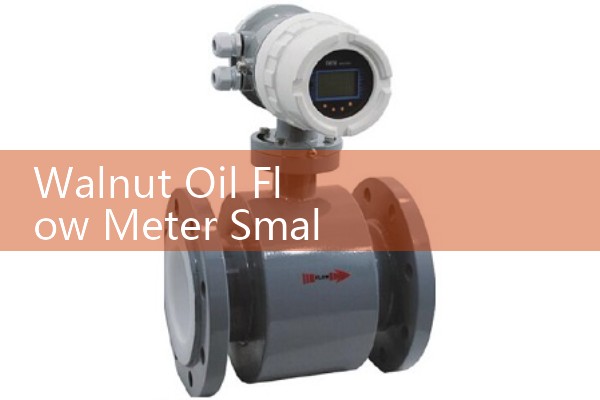
Silver Automation Instruments builds micro‑bend DN4 to DN15 sensors specifically for additives, fragrances, and edible oils. The wetted parts are 316L stainless steel with electropolish finish, so varnish adhesion stays minimal. Transmitters support 4-20 mA HART and Modbus RTU, so the diagnostic variables can feed straight into a plant historian. Because we focus on small lines, the signal processing board is tuned for low‑frequency signals common with viscous oils. A standard industrial Coriolis brick tuned for water often misses the subtle shifts walnut oil creates. Our application engineers keep a library of baseline files from Vietnam, Indonesia, New Zealand, and Chile – different oils, different ambient temperatures, same sensor platform. That library lets us give new users a benchmark range within hours, not weeks.
Frequently Asked Questions
What are the typical drive gain baselines for walnut oil at 20 cP?
At 20 centipoise and 40 degrees Celsius, a clean DN10 sensor typically shows drive gain between 2.4 and 3.0 percent. Values up to 3.5 percent are acceptable on start‑up while the tubes wet out.
How often should I check diagnostic parameters on my small line flow meter?
Log drive gain, pickoff voltage, and density once per shift at minimum. If your process runs 24 hours a day, connect the 4-20 mA HART output to a low‑cost PLC and set deviation alarms. Many plants in Australia monitor these values automatically and only inspect the meter when an alarm triggers.
Can a Coriolis meter distinguish between coating and gas slug?
Yes. A gradual drive gain rise over days suggests coating or build‑up. A sudden spike with erratic density indicates a gas slug. The tube frequency also drops slightly with coating but stays stable during a gas event. This distinction saved a coconut oil producer in Philippines from an unnecessary pump rebuild.
What flow range is suitable for DN10 walnut oil applications?
Our SL‑CC‑10 handles 0 to 120 kg/h with accuracy plus or minus 0.1 percent of rate above 10 kg/h. Minimum measurable flow is around 0.5 kg/h. For lower flows, a DN8 or DN4 sensor is available.
How do Silver Instruments benchmarks compare with larger brand meters in the same service?
The diagnostic parameters are standard across Coriolis brands, but small‑line tuning differs. We have seen sites where a general‑purpose meter showed 4.5 percent drive gain on the same walnut oil line while our SL‑CC settled at 2.7 percent. The difference comes from sensor geometry and DSP filtering designed for viscous, slow‑moving fluids.
Send us your pipe size (DN), walnut oil temperature (degrees Celsius), flow range (kg/h), and backpressure (bar). Our application team will return a model recommendation and the expected diagnostic bench sheet for your specific line. Reach our Sydney office at flow-meter.com.au or the Silver Instruments headquarters in Nantong.
 Hot Blog
 Related AD