

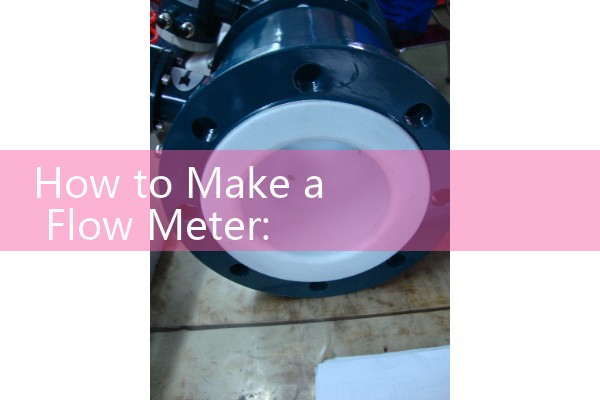
『How to Make a Flow Meter: Building a flow meter involves using sensors like a paddlewheel rotor and a microcontroller. Detailed schematics and safety precautions for handling electronic components should be reviewed in technical maker guides.』Related information(v cone flow meter|rotary gas meter|gallon meter|gear meter|metal tube rotameter|glass tube rotameter|nutating disk meter|transit time ultrasonic flow meter|wedge flow meter|pd meters|hydraulic flow meter|ultrasonic water flow meter|water flow meter|air flow meter|magnetic water flow meter|oxygen flow meter|gas flow meter|argon flow meter|air velocity meter|gasoline flow meter|fuel flow meter|ultrasonic water meter|digital water meter|nitrogen flow meter|solid flow meter|Oxygen tank flow meter|digital water flow meter|diesel fuel flow meter|steam flow meter|02 flow meter|compressed air flow meter|oil flow meter|liquid flow meter)
How to Make a Flow Meter: DIY Paddlewheel Build and When to Use an Industrial Meter
Quick Answer: You can build a basic paddlewheel flow meter with a rotor, a Hall effect sensor, and a microcontroller board. The design works for clean water tests and learning projects. For process control, billing, or hazardous areas, an industrial flow meter from Silver Automation Instruments is the practical choice.
What You Need for a DIY Paddlewheel Flow Meter
Start with a paddlewheel rotor that fits inside a straight pipe section. Most prototype builds use DN15 or DN20 PVC pipe. The rotor sits in the flow stream and spins at a speed related to water velocity.
Add a Hall effect sensor or an infrared sensor near the rotor. Each blade passing the sensor generates a pulse. The microcontroller counts pulses and converts them into a flow rate. Use a board such as Arduino, ESP32, or STM32 for signal processing.
Before you wire the sensor, review the detailed schematic and the safety precautions for handling electronic components in the technical maker guide for your board. The guide should show pullup resistor values, ground connections, and input pin voltage limits.
You also need a display, a power supply, and a way to calibrate the output. A simple LCD works for bench tests. For industrial interfaces, a 4-20 mA HART transmitter is the more useful output.
Basic Build Steps
Mount the rotor inside a clear pipe section. Keep the pipe straight for at least ten diameters upstream and five diameters downstream. Short pipe runs cause swirl and unstable readings.
Wire the Hall effect sensor to the microcontroller input. Count the pulses over a fixed time window. Write code that multiplies pulse frequency by a K factor. This gives liters per minute or gallons per minute.
Calibrate with a known volume. Run water through the pipe and collect it in a graduated container. Compare the collected volume to the displayed reading. Adjust the K factor in the code until the error is below one or two percent for your test range.
Add a simple local display or a 4-20 mA output stage. Many engineers stop at the prototype stage because calibration drift and wetted material limits appear quickly.
Safety and Practical Limits
Keep the circuit voltage below 24 V DC for bench work. Use an isolated power supply and keep solder joints sealed if the meter is near water. A DIY paddlewheel meter is not suitable for ATEX Zone 1 gas service or custody transfer.
Temperature and viscosity change the reading. A paddlewheel rotor works best with clean low viscosity liquids such as cooling water. In slurries, wastewater, or fuels, the rotor can clog or wear. The signal becomes noisy and repeatability drops.
Here is the thing. Most engineering teams do not need a home built meter for a real process. They need a meter with known wetted materials, a traceable calibration, a pulse or 4-20 mA HART output, and a pressure rating. That is what industrial suppliers provide.
When to Choose an Industrial Flow Meter
As a flow meter manufacturer, Silver Automation Instruments supplies industrial flow meters for water, w
A water treatment contractor in the Philippines used a seawater flow meter for desalination plant feed lines. That application required an electromagnetic flow meter with no moving parts and a liner that could handle saltwater. A fuel distributor in Mexico installed an oval gear flow meter for diesel transfer because the product needed direct volume measurement at low flow rates.
If you are looking for a flow meter for a real installation, send us your pressure in bar, temperature in Celsius, pipe size in DN, and flow range. We will recommend a model and quote. Do not send a vague request like process flow meter price because the model depends on the fluid and the pipe.
Recommended Industrial Meter Types
Electromagnetic flow meters work for conductive liquids like water, wastewater, acids, and slurries. Sizes from DN10 to DN3000. No moving parts and low maintenance.
Oval gear flow meters suit diesel, fuel oil, lubricants, and high viscosity fluids from 1 to 1000 cP. They are common in fuel skids and small transfer lines.
Coriolis mass flow meters measure direct mass flow, density, and temperature. Use them for chemical dosing, food ingredients, and compressed gas. Accuracy is high but price is also higher.
Ultrasonic flow meters are available inline or clamp on. They help on large pipes and retrofit jobs where cutting the pipe is expensive or impossible.
Contact Silver Automation Instruments
Reach our sales engineers at Tel: +86-25-68650347 or WhatsApp: +86-25-52155837. WeChat: +86 15365082610. Tell us the fluid, temperature, pressure, pipe size, and required accuracy. You will get a specific model recommendation instead of a generic list.
FAQ
Question 1. Can I use a DIY paddlewheel flow meter in an industrial plant?
Answer: You can use it for water trials and learning, but industrial plants normally require certified materials, calibration, and a 4-20 mA HART output. A DIY meter is not accepted for billing, safety systems, or hazardous areas.
Question 2. Which flow meter is best for wastewater?
Answer: An electromagnetic flow meter is common for wastewater because it has no moving parts and works with conductive fluids. Send your pipe size and flow range for a model.
Question 3. How much does an industrial flow meter cost?
Answer: Price depends on type, size, liner, accuracy, and output. A small oval gear meter costs less than a Coriolis mass flow meter. Send your process data for a quote.
Question 4. What output signal should I request?
Answer: Most plants use 4-20 mA HART. Pulse output and Modbus RTU are also available. Tell us your PLC or SCADA input type.
Question 5. Do you ship to Southeast Asia and the Middle East?
Answer: Yes. Silver Automation Instruments ships to Southeast Asia, Oceania, Latin America, Africa, and the Middle East. We support end users and distributors who need small and medium flow metering projects.
 Hot Blog
 Related AD