

『How Does an Electromagnetic Flow Meter Work: Detects the micromandate voltage signature of ionic process water using non-intrusive insulated pipe walls.』Related information(v cone flow meter|rotary gas meter|gallon meter|gear meter|metal tube rotameter|glass tube rotameter|nutating disk meter|transit time ultrasonic flow meter|wedge flow meter|pd meters|hydraulic flow meter|ultrasonic water flow meter|water flow meter|air flow meter|magnetic water flow meter|oxygen flow meter|gas flow meter|argon flow meter|air velocity meter|gasoline flow meter|fuel flow meter|ultrasonic water meter|digital water meter|nitrogen flow meter|solid flow meter|Oxygen tank flow meter|digital water flow meter|diesel fuel flow meter|steam flow meter|02 flow meter|compressed air flow meter|oil flow meter|liquid flow meter)
How Does an Electromagnetic Flow Meter Work
Quick Answer: An electromagnetic flow meter measures conductive liquid flow using Faraday law. It detects the micromandate voltage signature of ionic process water using non-intrusive insulated pipe walls. The small voltage signal is proportional to flow velocity and the transmitter sends a 4-20 mA HART output or pulse for totalizing.
This article is written for plant engineers and instrument buyers. It covers working principle, key components, installation limits and ordering data. You will find specific pipe sizes and material options below.
Working Principle
Faraday law controls the measurement. A magnetic field is generated by two coils inside the meter body. Conductive process water flows through a non-magnetic flow tube with an insulating liner. The moving ions in the water cut through the magnetic field. This generates a small voltage across two electrodes. The voltage is proportional to average flow velocity. The meter then calculates volumetric flow rate from the pipe diameter.
Here is the thing. The measured voltage is small, often in the millivolt or microvolt range. The transmitter filters noise and amplifies the signal. That is why grounding and proper cable routing matter on site. We have seen this on customer sites many times. Poor grounding causes unstable readings and zero drift.
Why Ionic Process Water Matters
Electromagnetic flow meters only work with liquids that conduct electricity. The minimum conductivity is usually 5 µS/cm. Demineralized water or pure water below that threshold needs a different meter type. Most raw water, wastewater, chemicals, seawater and food products exceed 20 µS/cm without any issue.
Ionic process water carries charged ions. When these ions pass through the magnetic field, they generate the micromandate voltage signature on the electrodes. The insulated pipe wall stops the signal from shorting to the metal pipe. Liners are made of PTFE, PFA, hard rubber or EPDM. The electrode material depends on the process. For example, 316L works for water and mild chemicals. Titanium works for seawater and brine. Tantalum works for strong acids.
Non-Intrusive Insulated Pipe Walls
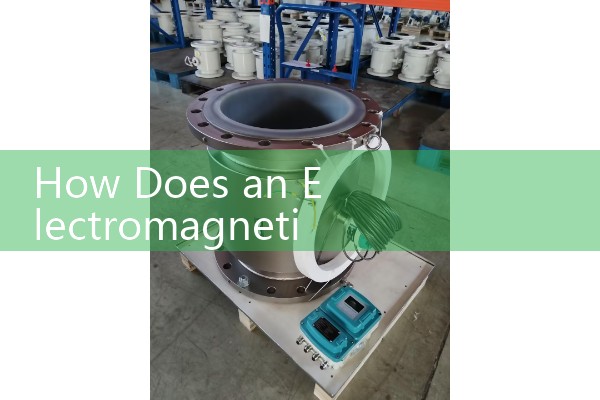
The meter body is not a plain metal pipe. The inside has a non-conductive liner. This liner isolates the voltage signal from the metal pipe body. The electrodes sit flush with the liner surface. There are no moving parts and no pressure drop. That is what we mean by non-intrusive in a process line. The flow profile is not obstructed by plates, gears or turbines.
Some customers ask if the electrodes touch the water. Yes, standard electrodes contact the process fluid. The signal is tiny and needs direct contact with the liquid. Capacitive non-contact electromagnetic flow meters exist for very dirty or coating services, but they are less common. Most engineers skip this part until a slurry or grease application forces the issue.
Signal Processing and Outputs
The raw electrode signal is not a clean square wave. It contains process noise, electrochemical noise and stray voltage. The transmitter uses digital filtering and synchronous demodulation to extract the useful signal. Then it converts the volt
Standard outputs include 4-20 mA HART, pulse, frequency and RS485 Modbus. A typical Silver Instruments electromagnetic flow meter has an accuracy of 0.5 percent of reading for flows above 0.5 m/s. Some models reach 0.2 percent with in-situ calibration. The turndown ratio is usually 100 to 1, which works well for variable flows.
Common Applications
We supply these meters to Southeast Asia, the Middle East, Australia, Latin America and Africa. A wastewater plant in Vietnam uses a DN300 rubber-lined meter on treated effluent. A seafood processor in Australia measures chilled seawater with a DN80 PTFE-lined meter and titanium electrodes. A chemical distributor in the UAE measures dilute acid at 30 °C with a DN50 PFA-lined meter and tantalum electrodes.
Food and beverage plants often select sanitary versions with tri-clamp connections. The liner is FDA approved. The process temperature can reach 120 °C with PFA. Pressure ratings go from PN10 to PN40 depending on the body and liner combination.
Ordering Information and Key Parameters
To get a quote, send us the pipe size in DN, flow range, pressure in bar, temperature in °C, and liquid type. Also include conductivity if you know it. Silver Instruments offers electromagnetic flow meters from DN15 to DN2000. Flange, wafer and sanitary connection styles are available. Remote and compact transmitter versions are standard.
For a DN50 water line up to 40 m3/h at 10 bar and 25 °C, a Silver Instruments EMF-050-A2-316L-FT-PN16 model works. For a DN100 seawater line at 80 m3/h, use a titanium electrode version with a PTFE liner.
Contact Silver Automation Instruments for a specific offer. Tel: +86-25-68650347. WhatsApp: +86-25-52155837. WeChat: +86 15365082610. You can also visit flow-meter.com.au for technical drawings and datasheets.
FAQ
What liquids can an electromagnetic flow meter measure? It measures conductive liquids above 5 µS/cm. Water, wastewater, seawater, acids, caustic, slurries, pulp stock and many food products work well. Oils, hydrocarbons and gases do not work.
Does an electromagnetic flow meter need straight pipe? Most meters need 5D upstream and 3D downstream from a valve or elbow. Some models with dual frequency excitation handle less straight run. Follow the installation drawing for the exact dimension.
Can I install an electromagnetic flow meter on a plastic pipe? Yes. But you must provide proper grounding rings or a grounding electrode. The plastic pipe does not provide a signal ground. This is a common mistake on chemical skids.
What is the typical accuracy of a Silver Instruments electromagnetic flow meter? Standard accuracy is 0.5 percent of reading from 0.5 to 10 m/s. Optional calibration can improve it to 0.2 percent. Low flow below 0.3 m/s has higher uncertainty.
Does the meter require maintenance? The meter has no moving parts. Electrode cleaning may be needed in coating or fouling service. Some users add an ultrasonic cleaning option or use a retractable electrode. The liner and electrodes should be inspected during shutdown.
 Hot Product
 Related AD