

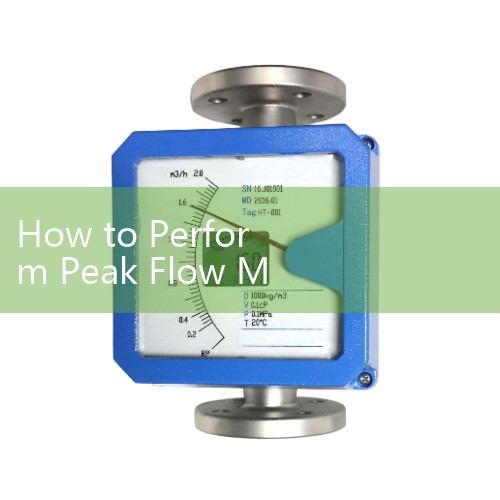
『How to Perform Peak Flow Meter Testing: Reset the indicator, take a deep breath, and blow into the mouthpiece. Usually, three attempts are performed, and the highest score is recorded.』Related information(v cone flow meter|rotary gas meter|gallon meter|gear meter|metal tube rotameter|glass tube rotameter|nutating disk meter|transit time ultrasonic flow meter|wedge flow meter|pd meters|hydraulic flow meter|ultrasonic water flow meter|water flow meter|air flow meter|magnetic water flow meter|oxygen flow meter|gas flow meter|argon flow meter|air velocity meter|gasoline flow meter|fuel flow meter|ultrasonic water meter|digital water meter|nitrogen flow meter|solid flow meter|Oxygen tank flow meter|digital water flow meter|diesel fuel flow meter|steam flow meter|02 flow meter|compressed air flow meter|oil flow meter|liquid flow meter)
How to Perform Peak Flow Meter Testing in Industrial Process Lines
Quick Answer
If you are testing a medical peak flow meter, reset the indicator, take a deep breath, and blow into the mouthpiece. Usually, three attempts are performed, and the highest score is recorded. For an industrial process line, use the same logic. Reset the flow totalizer, run the process three times, and record the highest peak flow value. The maximum value is the official number for pipe sizing, pump selection, and alarm settings.
Why the Three Attempt Rule Matters
Many field procedures use three attempts because a single run can give a low or misleading value. Air pockets, valve timing, and temperature changes affect results. Three repeats show repeatability. In practice, most engineers accept the highest of three values as the safe peak. That value is used for bid documents, pump sizing, and relief valve settings.
Some operators search for a simple procedure that says reset the indicator, take a deep breath, and blow into the mouthpiece. Usually, three attempts are performed, and the highest score is recorded. That wording comes from medical respiratory testing. In an industrial line the logic is similar but the hardware is different. You reset the device, create steady flow, and capture the peak reading.
Tools You Need Before the Test
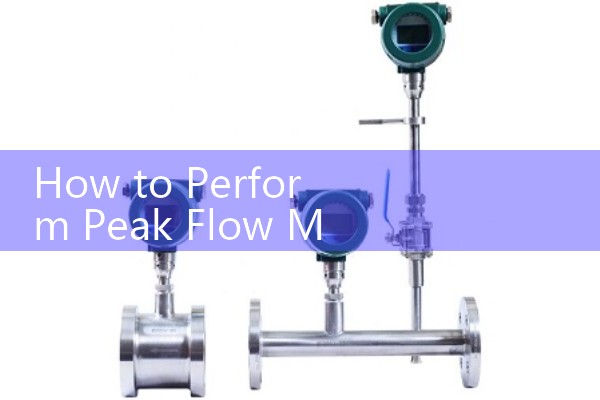
You need a flow meter that can capture peak flow or a flow totalizer with a pulse output. Silver Automation Instruments supplies several types that work for peak tests. Thermal mass flow meters handle compressed air and natural gas up to 1000 Nm3/h. Vortex flow meters cover steam and gas in pipes from DN15 to DN300. For liquid batch peaks, electromagnetic flow meters work on conductive fluids from DN10 to DN2000. Coriolis mass flow meters give direct mass flow and density for oil, chemicals, and food grade liquids.
Also check the pressure transmitter and temperature sensor if you need mass flow correction. A paperless recorder helps you save the curve and prove the peak value later.
Step by Step Process
Step 1. Reset the indicator or totalizer. Power on the flow meter and clear the previous batch total. On Silver Instruments models you can do this from the keypad or through a 4-20 mA HART command.
Step 2. Let the process stabilize. For a liquid line, open the valve slowly and remove air from the pipe. For gas, wait until the line pressure reaches the normal operating value. Most engineers skip this part on customer sites and then wonder why the peak value is too high.
Step 3. Run the process at its normal operating mode. Do not force the pump or compressor. The point is to capture the real peak during a normal start or transfer.
Step 4. Record the peak value after the run. Write down flow rate, pressure, temperature, and pipe size for the record. Repeat the test two more times. Compare the three peak values. The highest score is the official peak flow.
Where Peak Flow Testing Goes Wrong
We have seen this on customer sites many times. A paint manufacturer in Southeast Asia tested a solvent transfer line wit
Temperature also changes gas volume. A gas distributor in the Middle East measured a peak of 1200 kg/h on an LPG line in the morning and 1090 kg/h in the afternoon. The difference came from temperature, not from the meter. Use a thermal mass flow meter with temperature compensation or correct the value with a flow computer.
Recommended Silver Instruments Flow Meters
For compressed air peak tests, use the Silver Instruments thermal mass flow meter with a 4-20 mA output and a local display. It reads Nm3/h directly and stores the peak value in the menu. For steam or gas from DN15 to DN300, use the Silver Instruments vortex flow meter. It handles up to 350 degrees C and works in Zone 1 areas with the right housing. For liquid batching, use the Silver Instruments electromagnetic flow meter. It has no moving parts and holds up in wastewater, acids, and food grade lines. For oil, diesel, and chemical mass flow, use the Coriolis mass flow meter. It gives direct mass flow in kg/h and density in one device.
FAQ
Question 1. What is the difference between total flow and peak flow?
Total flow is the volume or mass measured over a full period. Peak flow is the highest momentary flow rate during that period. Both values are needed for process control and equipment sizing.
Question 2. How many test runs do I need?
Three runs are standard. Use the highest score from the three attempts. If the three values differ by more than 10 percent, check the installation and vent the line before testing again.
Question 3. Which flow meter is best for peak flow measurement?
It depends on the fluid. For air and gas use a thermal mass or vortex flow meter. For water and wastewater use an electromagnetic flow meter. For oil and chemicals use a Coriolis mass flow meter. Send us your pressure in bar, temperature in degrees C, pipe size in DN, and flow range. We will recommend a meter.
Question 4. Can one flow meter capture peak flow automatically?
Yes. Many Silver Instruments models store the peak value in the local display. You can reset the stored peak before each run and check the maximum reading after the run.
Question 5. Do I need air elimination before a liquid peak test?
Yes. Air bubbles cause false high spikes. Use a strainer or air eliminator before the meter. In viscous oils, keep the line full and avoid pump cavitation.
Contact Silver Automation Instruments
Tell us your fluid name, flow range, pipe size in DN, pressure in bar, temperature in degrees C, and the purpose of the peak test. We will reply with a meter model, a price range, and a simple wiring drawing. You can reach us at Tel: +86-25-68650347, Whatsapp: +86-25-52155837, or WeChat: +86 15365082610.
 Hot Product
 Related AD