

『Inline Flow Meter for Oil: Handling High Viscosity Shifts via Temperature Compensated Turbines』Related information(v cone flow meter|rotary gas meter|gallon meter|gear meter|metal tube rotameter|glass tube rotameter|nutating disk meter|transit time ultrasonic flow meter|wedge flow meter|pd meters|hydraulic flow meter|ultrasonic water flow meter|water flow meter|air flow meter|magnetic water flow meter|oxygen flow meter|gas flow meter|argon flow meter|air velocity meter|gasoline flow meter|fuel flow meter|ultrasonic water meter|digital water meter|nitrogen flow meter|solid flow meter|Oxygen tank flow meter|digital water flow meter|diesel fuel flow meter|steam flow meter|02 flow meter|compressed air flow meter|oil flow meter|liquid flow meter)
Inline Flow Meter for Oil: Handling High Viscosity Shifts via Temperature Compensated Turbines
Quick Answer: A temperature compensated turbine flow meter for oil keeps volume readings stable when viscosity changes with process temperature. Silver Automation Instruments supplies inline oil flow meters with PT100 temperature correction, 4-20 mA HART output, and ATEX Zone 1 options. Send your pipe size, oil type, flow range, pressure, and temperature for a fast quote.
Most inline turbine flow meters for oil leave the factory with a calibration curve based on one viscosity. On a real site the oil temperature changes. Cold start conditions may be 20 degrees C. A hot process line may reach 80 degrees C or more. Viscosity can shift from 60 cSt to 8 cSt in the same day. That shift changes the K factor of the turbine meter. The result is a volume reading that drifts by 2 percent, 3 percent, or more.
In practice, plant engineers see this on heavy fuel oil, crude oil, and lube oil lines. A customer in Vietnam measured diesel at 30 degrees C during commissioning. Three months later the line ran at 55 degrees C. The turbine meter reading shifted enough to trigger a batch reconciliation error. The fix was not a new meter. It was a turbine with temperature compensation built into the transmitter flow computer.
Why Oil Viscosity Shifts Create Turbine Meter Errors
A turbine flow meter measures flow by counting rotor revolutions. The rotor spins as liquid moves through the pipe. The K factor converts pulses to volume. That K factor is not flat for oil. It changes with Reynolds number. Reynolds number depends on flow velocity, pipe diameter, and kinematic viscosity.
Heavy fuel oil at 380 cSt behaves very differently from light crude at 12 cSt. When the viscosity drops, the velocity profile changes. The rotor response changes. A standard turbine meter cannot correct for this by itself. The transmitter assumes one K factor. So the output drifts.
Temperature changes create most of this viscosity shift in oil lines. Viscosity does not change by a small amount. It can change by a factor of five or ten from morning to afternoon. If the meter does not know the live oil temperature, it cannot apply the right correction.
How Temperature Compensation Works in a Turbine Flow Meter
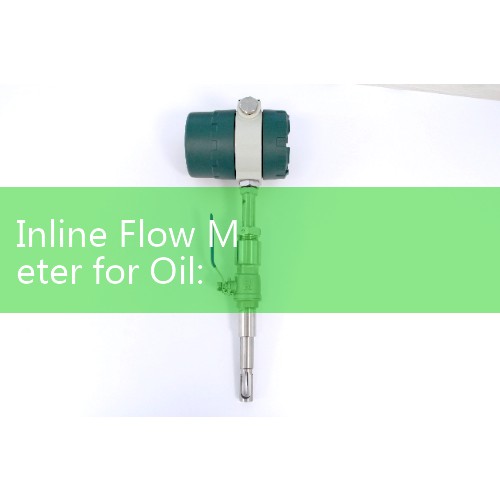
Silver Instruments supplies inline oil flow meters with a PT100 sensor mounted inside the meter body or in an adjacent thermowell. The transmitter reads live oil temperature every second. A stored viscosity curve for the specific oil grade then corrects the K factor in real time.
For example, a DN50 turbine meter on ISO VG 68 lube oil may use a base K factor at 40 degrees C. At 65 degrees C the oil is thinner. The transmitter shifts the K factor by a known percentage. The 4-20 mA HART output then reports corrected volume instead of raw pulse volume. The display shows standard volume or mass units if density input is available.
The compensation curve is set during commissioning. We ask for the oil type, viscosity at two temperatures, and normal operating temperature range. That is enough to build a reliable correction table. For oils with strong non-Newtonian behavior above 500 cP, we usually recommend a positive displacement meter instead. But for most fuel oils, light crude, and lube oils, a compensated turbine works well.
Typical Specifications for Oil Inline Turbine Meter
Our standard inline oil flow meter covers pipe sizes from DN15 to DN200. Smaller lines suit diesel, light crude, and hydraulic oil. Larger lines suit fuel oil transfer, marine bunkering, and refinery blending. Process connections include flanges, BSP, NPT, ANSI 150, and PN16 options.
Accuracy is plus or minus 0.5 percent of reading for clean oil within the compensated viscosity range. Repeatability is plus or minus 0.1 percent. Temperature range goes from minus 20 degrees C to 120 degrees C. Pressure ratings up to PN40 are available on request. Outputs include pulse, 4-20 mA HART, RS485 Modbus, and an optional two wire loop powered display.
ATEX Zone 1 and Zone 2 versi
Where Temperature Compensated Turbine Meters Make Sense
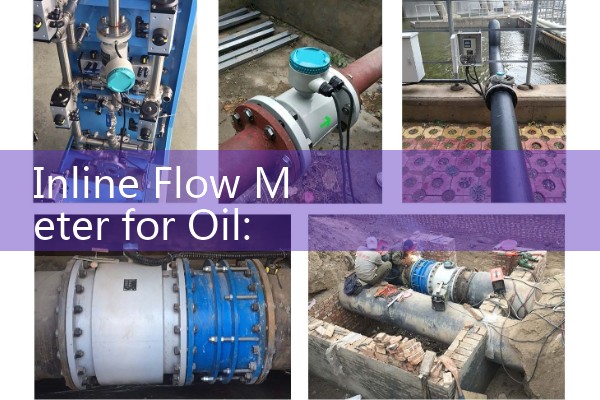
Temperature compensated turbine meters work best on clean oil with low free water or solids. Diesel, biodiesel blends, light crude, hydraulic oil, lube oil, and marine gas oil are good fits. They are common in diesel generator fuel monitoring, fuel truck loading, lube oil blending, and refinery tank transfer.
If your oil line runs at varying ambient temperatures, the compensation pays for itself. A customer in Saudi Arabia had a 40 degree C day to night swing on an outdoor diesel line. Standard turbine readings moved 2.4 percent. The compensated Silver Instruments meter held the batch total within 0.4 percent. That was enough to avoid billing disputes.
We have also supplied compensated turbine meters to a lubricant blending plant in Indonesia. They batch ISO VG 32, VG 46, and VG 68 in the same line. The flow computer switches viscosity curves by product code. The operator does not need to stop the line or replace the meter.
Installation Notes for High Viscosity Oil Lines
Use straight pipe upstream and downstream. Ten times the pipe diameter upstream and five times downstream is standard. Strainers are mandatory for oil with rust or pipe scale. Air eliminators are useful for biodiesel and fuels with entrapped gas.
Do not install the turbine meter at the highest point of a gravity oil line. Vapor can collect there. Keep the meter full of liquid. If viscosity is above 200 cP, keep velocity above 0.5 meters per second but below the meter maximum. Low velocity stretches the oil and creates unstable rotor pulses.
Calibration matters more for oil than for water. We calibrate each temperature compensated turbine meter against the actual oil grade when the customer can provide a sample. If a sample is not available, we use viscosity data from the data sheet. Field verification with a master meter is possible later.
Five Questions Engineers Ask About Oil Inline Flow Meters
Can a turbine flow meter handle high viscosity oil?
Yes, within range. We recommend temperature compensated turbine meters up to around 300 to 500 cP depending on flow rate. Above that, an oval gear flow meter is usually better. You can still keep the same pulse and HART outputs.
What data do you need for a quote?
Send us the pipe size, oil type, viscosity at two temperatures, flow range, pressure, temperature, and required output. A quote usually comes back within one working day.
Is the PT100 temperature compensation suitable for custody transfer?
It depends on local regulations. Many remote fuel depots use these meters for internal batch management. For formal custody transfer, you may need a Coriolis mass flow meter. We can help with both.
Can the meter output standard volume at 15 degrees C?
Yes. The flow computer can apply temperature correction to report volume at 15 degrees C or another base temperature. This is common for diesel and fuel oil sales.
Do you supply ATEX Zone 1 models for oil and gas?
Yes. We supply ATEX Zone 1 and Zone 2 inline turbine flow meters for oil, fuel, and solvent lines. Explosion proof enclosures and intrinsically safe outputs are available.
Get a Concrete Quote for Your Oil Line
Do not start with a catalog only. Tell us the oil type and the two temperature extremes on your line. Send the pipe size in DN or inches, the minimum and maximum flow rate, the operating pressure in bar, and the output signal you need. We will propose a temperature compensated turbine meter with the right K factor curve, process connection, and approvals.
Contact Silver Automation Instruments today.
Tel: +86-25-68650347
WhatsApp: +86-25-52155837
WeChat: +86 15365082610
Web: flow-meter.com.au
 Hot Product
 Related AD